


CSAT (Customer Satisfaction)
CSAT (Customer Satisfaction) is a key performance indicator that measures the satisfaction level of customers with a company's products or services.
Definition
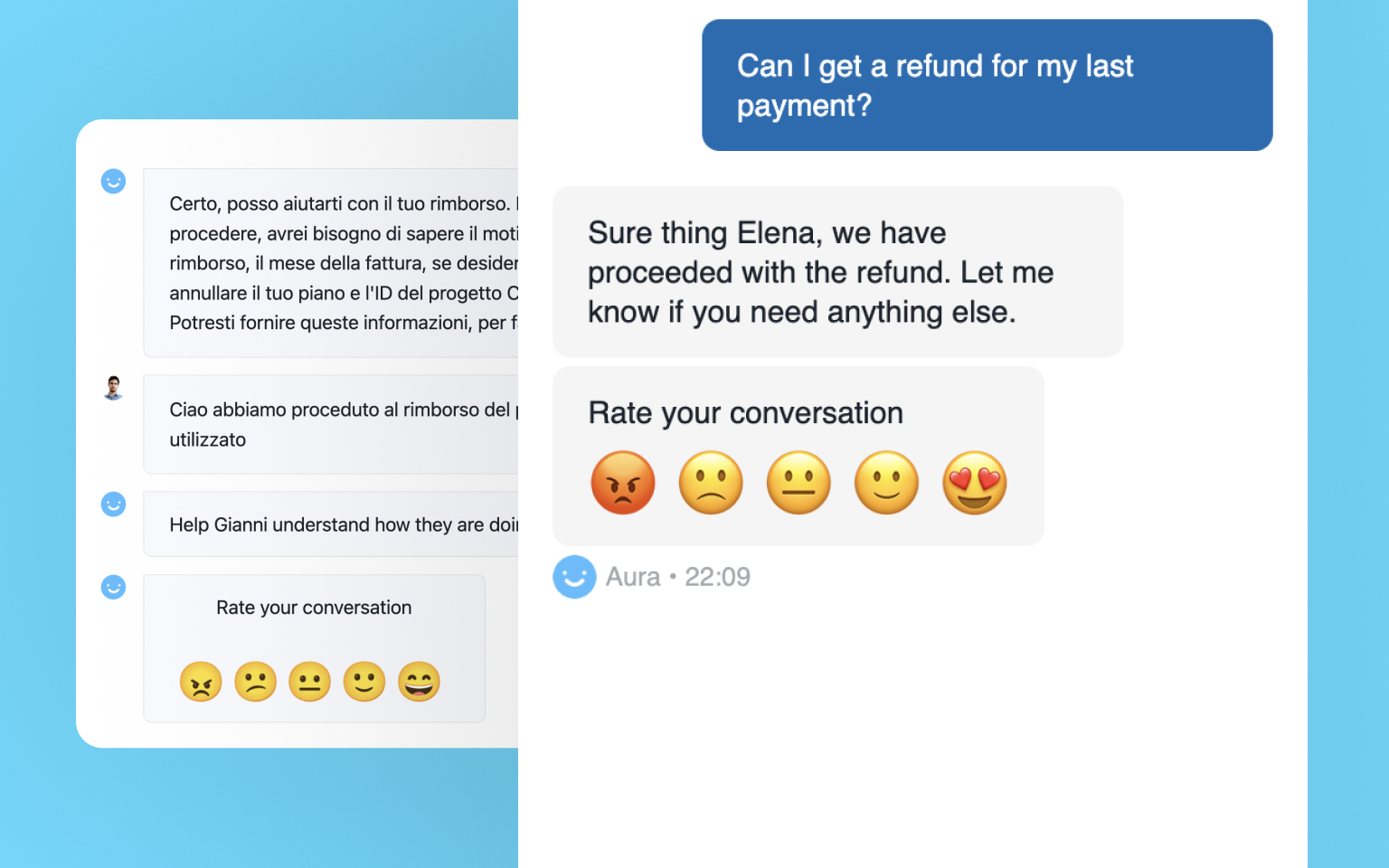
CSAT, or Customer Satisfaction, is a commonly used key performance indicator to track how satisfied customers are with a company's products, services, or experiences. It is typically measured using a scale, often from 1 to 5 or 1 to 10, with higher numbers indicating greater customer satisfaction.

Usage and Context
CSAT is used across industries and companies of all sizes. It is particularly prevalent in sectors with high customer interaction, such as retail, hospitality, and service industries. CSAT can be measured through various methods, including surveys, feedback forms, and direct customer interactions. The results are then analyzed to provide insights into customer preferences, expectations, and areas of improvement for the company.
FAQ
How is CSAT calculated?
CSAT is calculated by taking the average rating of customer responses to the satisfaction survey.
What is a good CSAT score?
A good CSAT score varies depending on the industry and the company's previous scores. Generally, a score above 75% is considered good.
Related Software
There are several software tools available that help in tracking CSAT, including Zendesk, Medallia, and Qualtrics.
Benefits
CSAT is an essential tool for businesses to understand their customers better. It helps identify areas of improvement, enhance products or services, and ultimately, increase customer loyalty and revenue.
Conclusion
In conclusion, CSAT is a crucial metric that companies use to gauge customer satisfaction. By understanding and improving CSAT scores, businesses can enhance their customer experience and achieve long-term success.
Related Terms
CaaS (Communication as a Service)
CaaS (Communication as a Service) is a cloud-based model for outsourcing enterprise communication solutions, offering cost savings, scalability, and flexibility.
CAC (Customer Acquisition Cost)
Learn about Customer Acquisition Cost (CAC), a key business metric that helps in understanding the cost of acquiring a new customer.
CAC:LTV (Customer Acquisition Cost to Lifetime Value Ratio)
The CAC:LTV ratio is a business metric assessing the cost of acquiring a new customer against the revenue they generate over their lifetime.
Call Centre Scripting Software
Call Centre Scripting Software is a tool used in call centres to guide agents through customer interactions. It improves consistency, efficiency and customer satisfaction.
Call Deflection
Call deflection is a strategy used in customer service to manage incoming calls by directing them towards more efficient, automated or self-service channels.
Call Escalation
Call Escalation refers to the process of transferring a customer's call to a higher authority or skilled representative to resolve complex issues.
Call Monitoring
Call Monitoring is the practice of observing and analyzing phone calls within a company to maintain quality control, ensure compliance, and improve customer service.
Call Recording
Call Recording is a technology-based process allowing businesses to record telephone conversations for quality control, training, and legal purposes.
Call Scripting
Call scripting is a strategy used to manage phone interactions with customers, providing a consistent and professional approach to communication.